
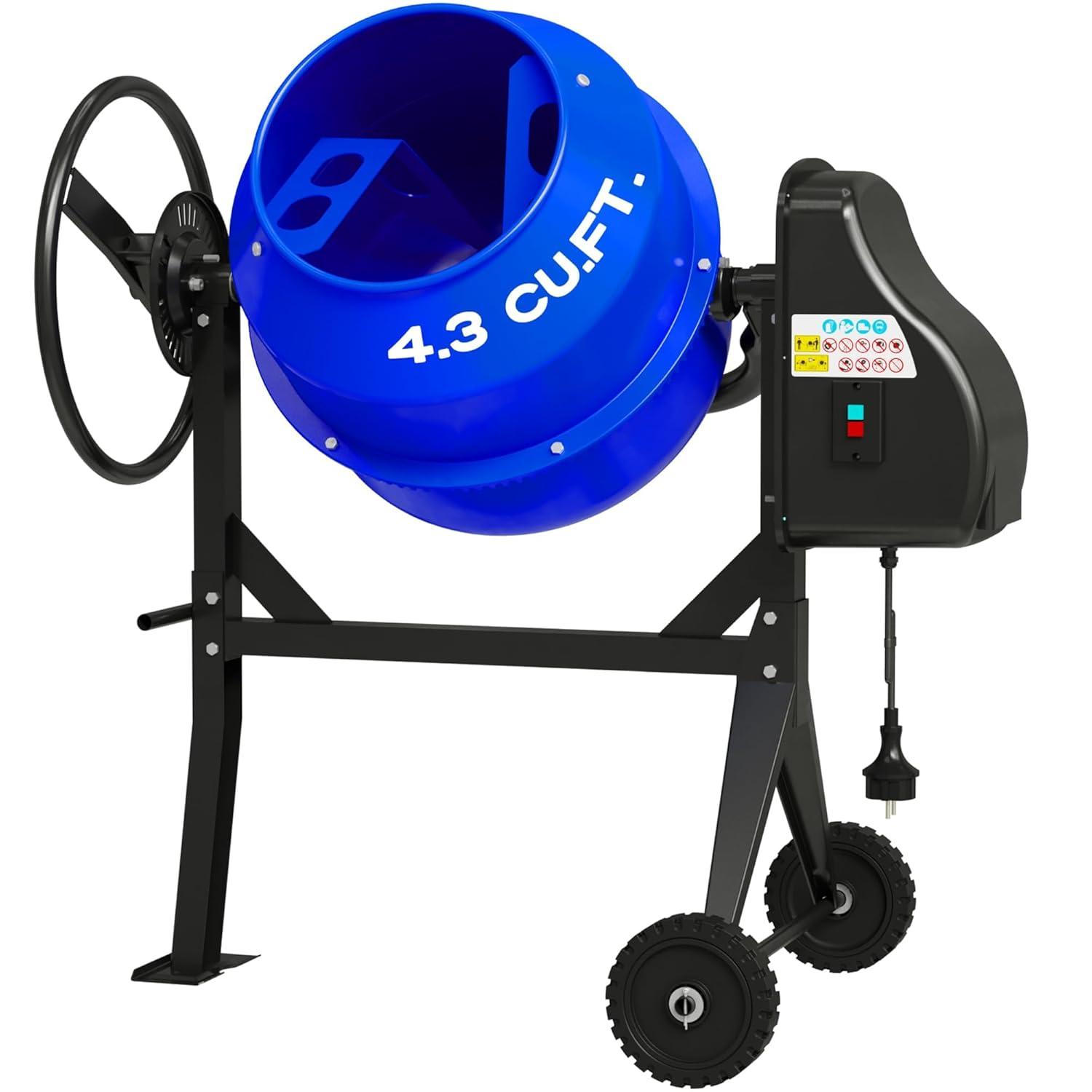
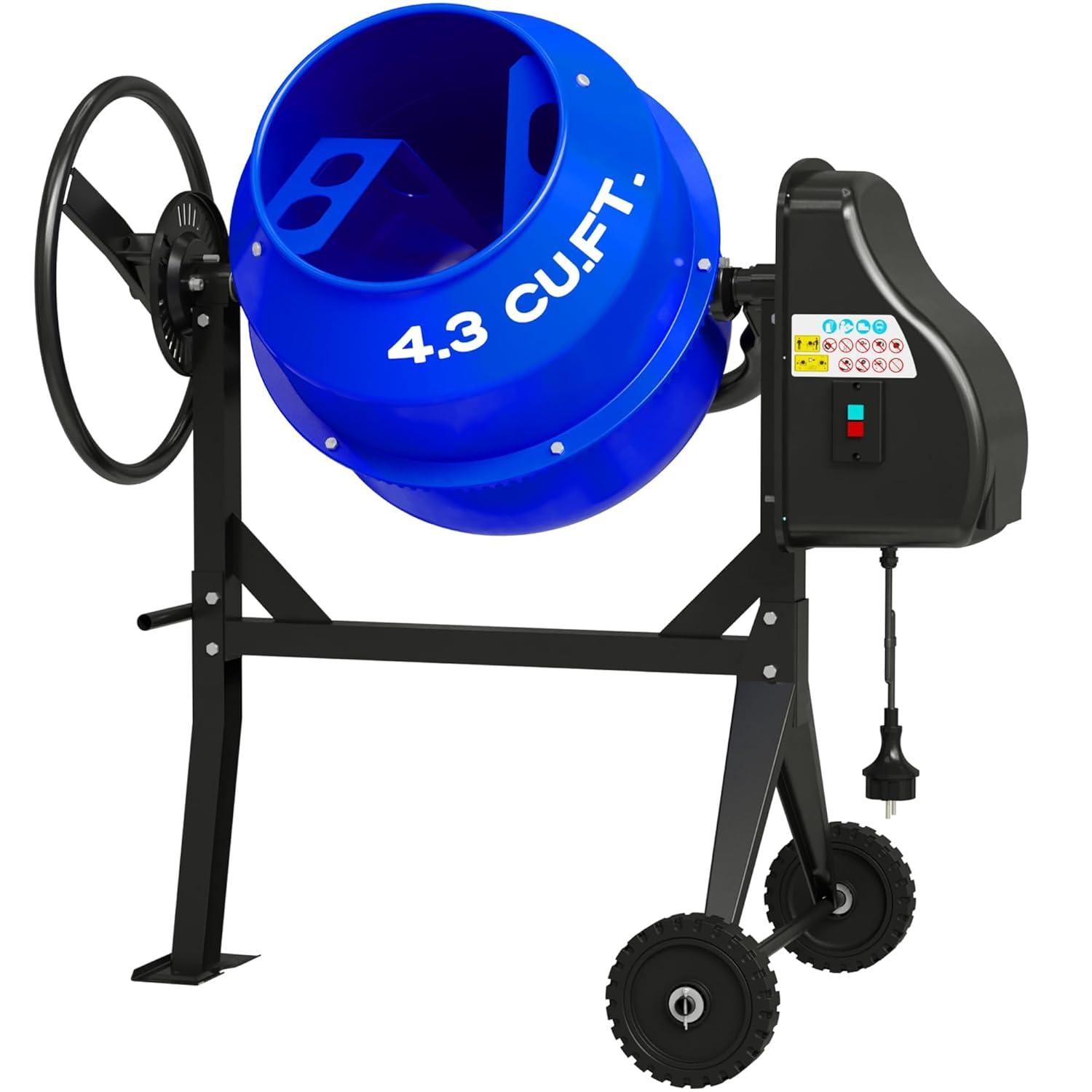
When we first unboxed the SILVEL 4.3 Cu.Ft.concrete mixer, we felt like we were unpacking a compact workhorse – heavy-gauge powder-coated steel, a cast-iron toothed ring, and a stout stand with two big solid wheels that promised to make short work of small to medium jobs. With a 120 L (4.3 cu. ft.) drum driven by a 450 W (3/5 HP) copper motor at about 28 RPM, this mixer isn’t designed to replace a contractor’s site rig, but it looked perfectly suited for patio footings, small stucco patches, and the kind of weekend concrete and mortar projects we tackle around the house.
After about an hour of assembly we put it to the test: mixing several 60 lb bags in succession, moving it across rough ground, and tilting the drum with the spring-loaded disc for discharge. The results were mixed (no pun intended). It handles 3-4 bags comfortably and mixes quickly and evenly when we add enough water, and the triangular frame plus wheels make it surprisingly stable and portable. Conversely,we found a few practical quirks - loading can be fiddly with larger 80 lb bags,the drum’s discharge point lands close to the center (we improvised a plywood chute),and the tilt-lock mechanism can feel less secure than we’d like until it settles in.
In this review we’ll walk through performance, build quality, portability, assembly, and real-world usability – what worked, what we had to workaround, and for whom this mixer makes sense. If you’re weighing the SILVEL against other entry-level mixers, our hands-on time with it should help you decide whether it’s the right fit for your projects and budget.
Our Overview of the SILVEL Concrete Mixer and How It Performed on the Jobsite
On the jobsite we found this 4.3 cu.ft. mixer to be a reliable helper for small- to medium-sized tasks – it handled mortar, grout and concrete mixes cleanly and quickly thanks to the 450W (3/5HP) copper motor and a steady 28 RPM. The 360° tilting action and spring-loaded disc made dumping and cleaning straightforward, while the cast-iron toothed ring and powder-coated steel shell felt durable enough for occasional heavy use. Assembly took us about an hour, and after a few mixes (one owner reported 34 bags on its first run) we learned a couple of practical tips: load half a bag first, consider 60 lb bags instead of bulk 80 lb ones, and fashion a simple chute or plywood guide so mixed material doesn’t drop too close to the center.for our crews this was a cost-effective, portable solution with two big 7″ x 2″ wheels and a triangular stand that kept things stable around the site.
What stood out to us:
- Pros: Even mixing, easy to move, easy to clean, multipurpose for agricultural or construction mixes.
- Cons: Some units reported a weak bowl-lock spring and the gears could use grease fittings – for heavy, continuous commercial use we’d recommend a heavier-duty model.
| Spec | Value |
|---|---|
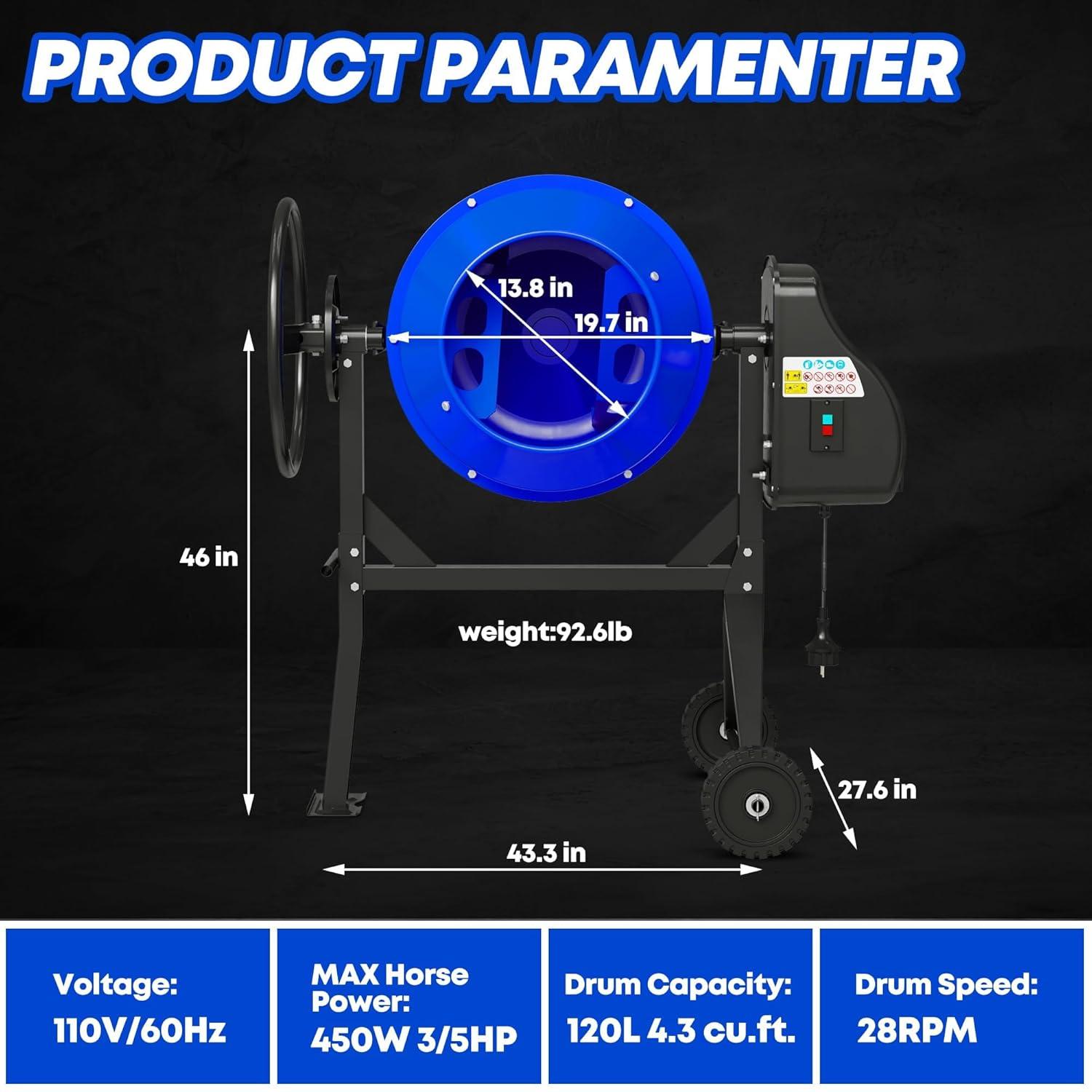
| Capacity | 4.3 cu.ft / 120 L |
| Motor | 450W (3/5HP) |
| speed | 28 RPM |
See current price and availability on Amazon
What We noticed About Build Quality Motor Response and Maneuverability
Build quality feels solid at first touch – the drum and frame are made from heavy‑duty steel with a powder‑coated finish that resists rust, and the toothed ring is cast iron for extra durability. We appreciated the spring‑loaded disc tilting wheel that allows for 360° turning and mixing, and the triangular stand gives the unit a reassuringly stable footprint. Assembly took us about an hour (echoing other users),and while most parts line up well,we noticed a couple of practical shortcomings reported by owners: the bowl can drop concrete too close to the center without a chute,and a few units showed a less-than‑positive locking spring,which makes holding the drum at angle less secure than we’d like.
- Pluses: durable materials,cast‑iron gear ring,stable triangular frame
- Minuses: no built‑in chute,some units need greased gears or a stronger locking spring
On motor response and maneuverability the machine punches above its size. the 450W copper motor (3/5HP) running at ~28 RPM gives efficient, fast mixing - multiple reviewers noted it handled four bags or more per batch without strain, and we found mixes become even quicker with the right water ratio. Mobility is straightforward: two large 7×2″ solid wheels and comfortable handles make repositioning on site easy, and the spring tilt mechanism simplifies dumping. A couple of practical tips we took from owner feedback: slow the barrel or add more water if cement is sticking (some found it spins a bit fast for very dry mixes), and plan to add grease to the gears since there are no fittings factory‑installed.
| Spec | Fast Note |
|---|---|
| Capacity | 4.3 cu.ft / 120L |
| Motor | 450W copper,3/5HP |
| Speed | ~28 RPM (fast mixing) |
| Mobility | 7×2″ solid wheels,handles |
See current price & reviews on Amazon
Our Hands On Insights and Practical Recommendations for Use Cleanup and Upkeep
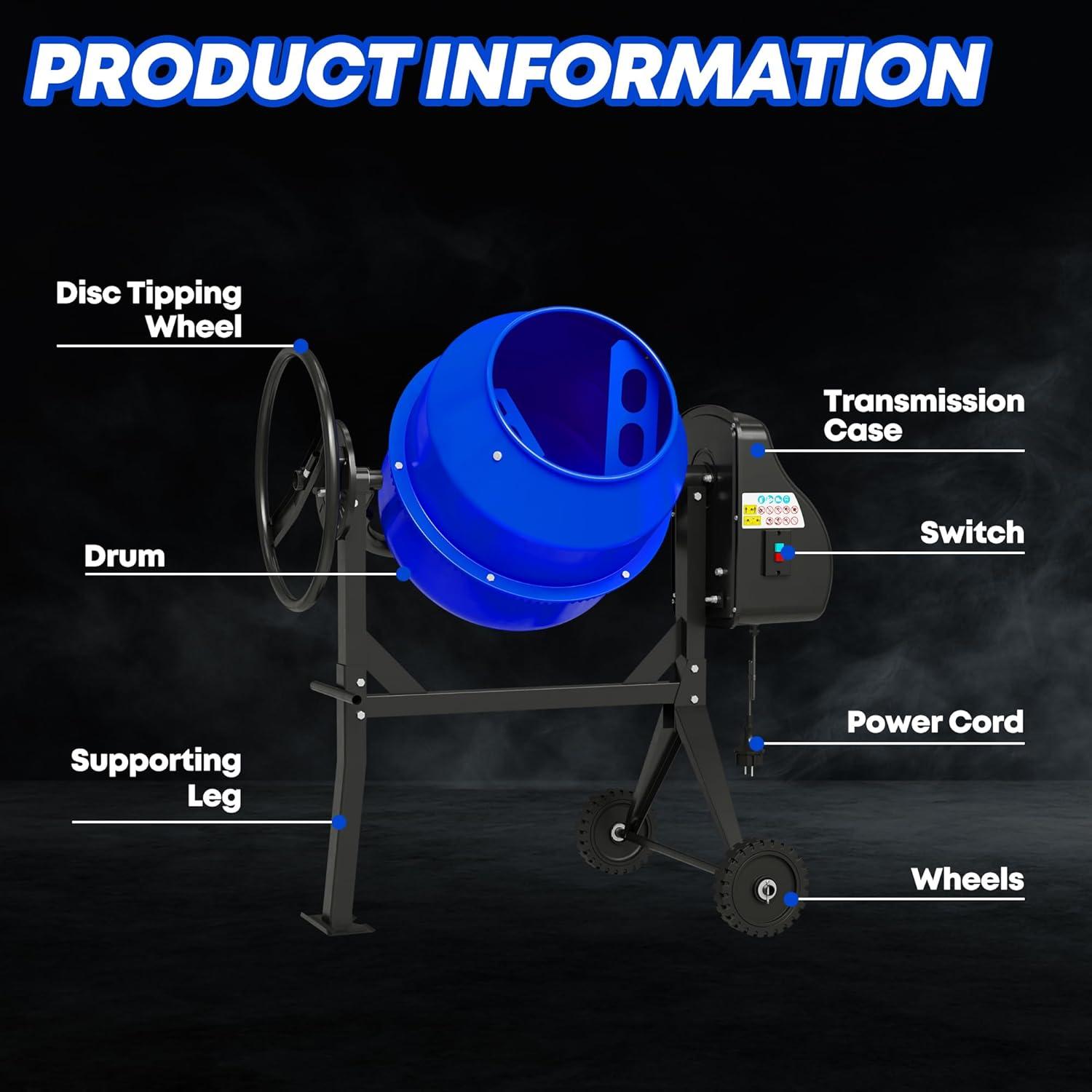
When we put this unit to work on small pours, a few practical habits made the biggest difference. Start by following the simple mixing order: load about half a bag first, let it mix, then add the rest – that reduces clumping and keeps the drum turning smoothly at its 28 RPM. We also found 60 lb bags easiest to handle; 80 lb bags need breaking down and get messy.The spring-loaded tilt wheel gives smooth 360° rotation, but we recommend testing the bowl lock immediately after assembly because some users report a weak spring – if the lock feels loose, secure it and keep a close eye on it during the first runs. If you need to direct the pour, a simple plywood chute works better than letting concrete drop to the center. Quick reminders we follow before each job:
- Check the tilt/spring lock and confirm the disc moves freely.
- Use smaller bags or pre-broken batches for faster loading.
- Keep water in reach to thin mixes and avoid sticking to the barrel.
Cleanup and upkeep are where longevity comes from,so we treat them as non-negotiable. Rinse the drum immediately after each use to prevent cured concrete from bonding to the powder-coated steel; the finish resists rust but won’t save you from hardened residue. Because the gear train lacks grease fittings,we manually lubricate the gearbox area and the toothed cast-iron ring on a regular basis - grease the gears after heavy use and wipe the cast iron dry to avoid surface rust. Our maintainance schedule is short and effective:
| Interval | Action |
|---|---|
| After each use | Rinse drum, remove slurry |
| Weekly | Grease gears, tighten bolts |
| Monthly | Inspect spring/lock & wheels |
- Store under cover to protect the powder coat and prevent moisture build-up.
- Roll it on solid ground using the large wheels and handles to avoid frame stress.
Pros & Cons
Pros & cons
After putting the SILVEL 4.3 Cu.Ft. mixer through small‑job routines – from patio footings to stucco touchups – we boiled our experience down to the practical wins and the trade‑offs. Below is what stood out to us, writen from our viewpoint so you know what to expect on-site.
What We Like
- Right‑sized for small jobs: At 4.3 cu.ft (≈120L) this mixer handles 3-4 bags comfortably,which is exactly the scale we need for drive‑up repairs,small slabs,and patch work.
- Compact power: The 450W (3/5HP) motor and 28 RPM give steady, consistent mixes - fast enough for day‑to‑day tasks without feeling overbuilt for a backyard project.
- Sturdy build for the price: Powder‑coated steel body and a cast‑iron toothed ring feel durable and resistant to the kind of knocks and concrete splatter we bring to the jobsite.
- 360° tilt and user‑friendly turning: The spring‑loaded disc tilting wheel makes dumping and positioning easy - we appreciated the freedom to flip and angle the drum where we needed it.
- Portable and stable: Two solid 7×2″ wheels, handles, and a triangular frame make moving and parking the mixer simple; it stays upright and steady during mixing.
- Good value for occasional use: For homeowners, landscapers, and small contractors who don’t need a heavy‑duty production unit, this mixer hits a sweet spot between capability and cost.
What We Didn’t Love
- No discharge chute included: Concrete drops toward the center of the drum – we made a quick plywood chute to direct the flow.It’s an easy fix, but something we expect to be included at this price point.
- Lock / spring inconsistencies: Some units (and some of our teammates) had trouble with the bowl locking mechanism – the spring can feel weak or fiddly, so check it during setup and first use.
- Gearing maintenance required: There are no grease fittings on the gearbox. We recommend greasing the gears early and periodically – it will extend life and smooth operation.
- Barrel speed can be high for sticky mixes: At the mixer’s set speed the drum can be a bit fast for low‑water mixes, meaning cement may cling. We found adding a little more water or mixing in stages helps.
- 80 lb bags are awkward: Larger 80 lb bags don’t fit easily – using 60 lb bags or pre‑breaking 80s into halves reduces the mess and strain.
- Not built for heavy commercial cadence: It’s a solid workhorse for small, intermittent jobs, but if you’re batching all day, every day, we’d recommend stepping up to a heavier commercial mixer.
| Quick Verdict | Why it matters |
|---|---|
| Best for | Home projects & small contractor jobs |
| Not ideal for | Continuous, high‑volume commercial work |
| Must‑do on arrival | Inspect lock, grease gears, plan a chute |
| Standout feature | Portable 360° tilt with a durable frame |
We chose the SILVEL 4.3 Cu.Ft. as it balances portability, build quality, and enough capacity for the jobs we take on. It’s not perfect – a few modest fixes (chute, grease, check the spring) make it a dependable little workhorse for small‑scale concrete work.
Q&A
Q: What size jobs is this mixer good for?
A: We found the SILVEL 4.3 cu.ft. (about 120 L) drum is ideal for small concrete jobs – patio patches, footings, stucco touch-ups, and batches of mortar or grout. It’s built for occasional contractor use and DIYers; it’s not meant to replace a full‑size site mixer for continuous, large‑scale pours.
Q: How much concrete can it actually mix per batch?
A: The drum handles roughly 3-4 standard bags per batch depending on bag size and mix consistency. Our testing and user reports suggest 60‑lb bags are easiest to load; 80‑lb bags frequently enough need to be split to fit neatly.
Q: Is it powerful enough?
A: The motor is rated at 450 W (listed as 3/5 HP) and runs around 28 RPM. That’s sufficient for evenly mixing small batches quickly, but it will feel sluggish if you expect industrial throughput. For small jobs it gets the job done without overheating.
Q: How portable is the unit?
A: Very. The mixer has two solid 7″ x 2″ wheels, a handle, and a triangular stand for stability. We can push it around a jobsite easily, though it’s still heavy enough that two people make assembly and repositioning simpler.
Q: How easy is assembly?
A: Expect to spend about an hour assembling it if you have basic tools. Some reviewers struggled with the gasket and a couple of springs; we recommend having a rubber mallet, adjustable wrenches, and patience. Follow the manual and check all fasteners before first use.
Q: Does the drum tilt and lock reliably?
A: The mixer uses a spring‑loaded disc tilting wheel for 360° turning. It generally tilts easily and pours cleanly, but a few users reported a weak locking spring or a poor lock engagement. Our advice is to test the tilt and lock before use and tighten or replace the spring if it feels loose.
Q: Do we need a chute?
A: Yes – a lot of users (and our own experience) shows the concrete discharges close to the center of the machine. A temporary plywood chute or a purpose‑made pour chute makes clean, controlled pouring much easier.
Q: Any maintenance tips?
A: Grease the gears regularly. several reviewers noted there are no grease fittings, so plan to apply grease manually to the gear teeth and moving joints.Clean the drum after each use to prevent hardened residue. Keep the toothed ring (cast iron) protected from heavy corrosion – the powder‑coated steel helps, but occasional touch‑up is wise.
Q: How fast does the drum spin – does concrete stick?
A: The drum speed is on the brisk side for its class (28 RPM). For very stiff mixes concrete can cling; adding sufficient water and scraping the interior occasionally helps. If you need slower, controlled mixing for specialty mixes, this model may feel a bit quick.
Q: Can it handle other materials?
A: Yes. The vendor lists mortar, grout, concrete, and even agricultural uses like mixing feed or seed. We’d clean thoroughly between incompatible materials (e.g., concrete and animal feed) to avoid contamination.
Q: Is it good value?
A: For small jobs and occasional professional use, we think it’s a strong value – rugged steel construction, cast‑iron gear ring, and portability. If you plan heavy daily use or large pours, we’d recommend stepping up to a heavier commercial model.
Q: Any other real‑world caveats?
A: Watch bag sizing - 60‑lb bags work best for easier loading. Some users reported fast shipping and solid reliability early on, while a minority encountered locking or assembly hiccups. Always inspect parts on arrival and follow safety steps when operating.
Q: What about warranty and support?
A: Warranty details weren’t fully verified in our sources. We recommend registering the product if the manufacturer provides that option and keeping your purchase receipt. Contact SILVEL or the seller directly for specific warranty and replacement‑parts questions.
If there’s one takeaway: we chose the SILVEL 4.3 cu.ft. as it balances portability, build quality (steel frame and cast‑iron gear), and cost for small to medium DIY and light‑trade jobs – but plan for a short assembly, a possible DIY chute, and routine maintenance to keep it running smoothly.
Experience Innovation
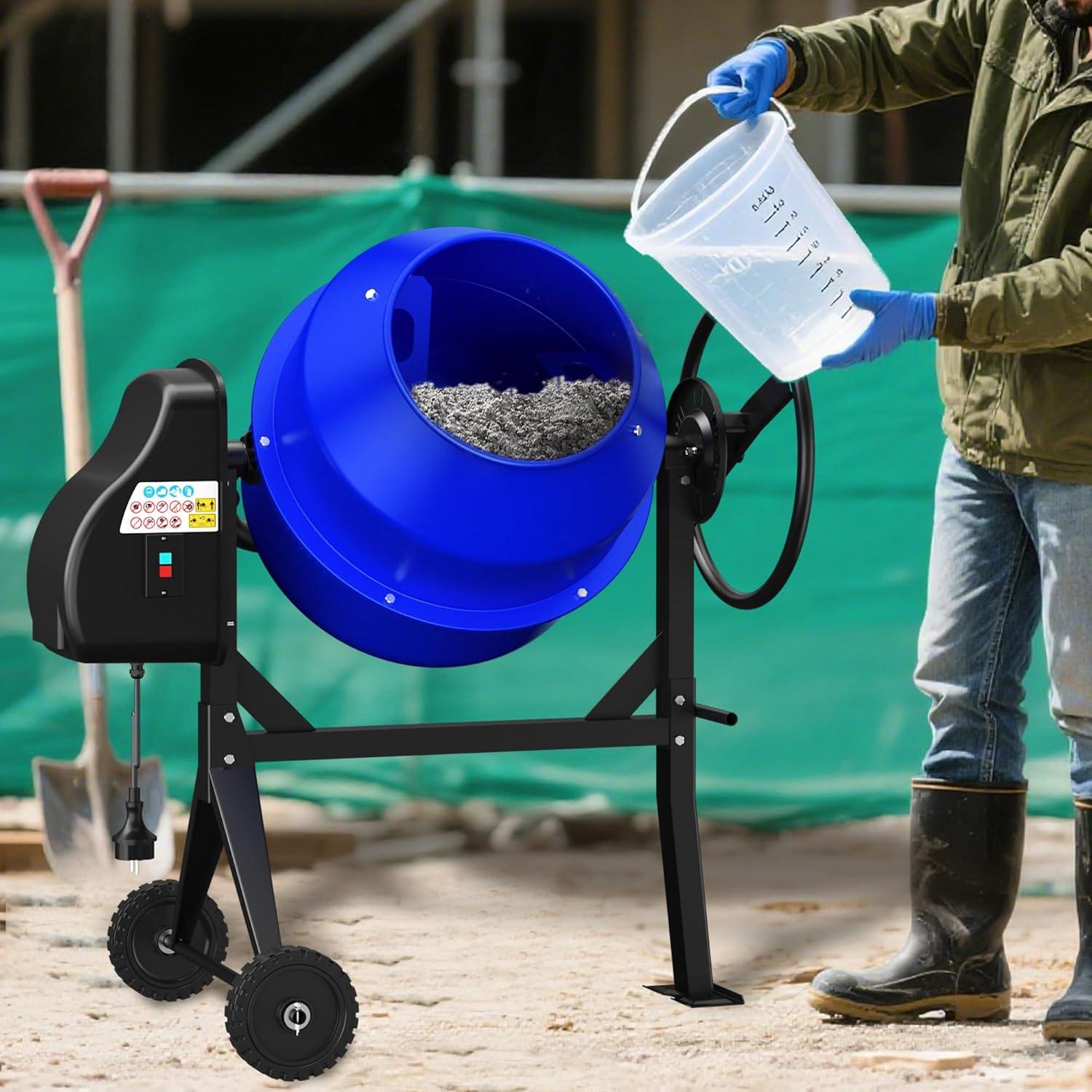
We picked the SILVEL 4.3 Cu.Ft. mixer because it fits the kind of work we actually do: small pours, fast turnarounds, and jobs where portability matters more than industrial scale. Its 120L drum, 450W motor and 360° tilt give us even mixes and easy dumping, the solid wheels and triangular frame make moving it across a site painless, and the cast-iron toothed ring plus powder-coated steel feel built to last for weekend warriors and small contractors alike.
That said, our experience and customer reports remind us this isn’t a flawless workhorse.Assembly can be fiddly, the bowl-lock and spring mechanism have occasionally needed attention, and a makeshift chute or some greasing of the gears improves day‑to‑day usability. The 4.2-star average from reviewers echoes that balance: mostly satisfied owners who note a few practical fixes and sensible limits.
In short, if your projects are small to medium and you want a practical, affordable mixer that gets the job done without the footprint or price of a pro-grade unit, this is one we’d recommend considering. If you’re running back-to-back large pours every week, it’s worth stepping up to a heavier model. For everyone else, the SILVEL represents a smart, capable choice that’s easy to move, simple to operate, and ready to work.


Reviews
There are no reviews yet.